

Download Greedy expressions in Regex.mp4
Greedy Expressions in Regular Expressions (Regex)
Greedy expressions are the default behavior in most regex engines.
They try to match as much text as possible while still allowing the overall pattern to succeed.
What does “greedy” mean?
When a regex uses a quantifier like:
*→ 0 or more times+→ 1 or more times?→ 0 or 1 time{m,n}→ between m and n times
…the regex engine will expand the match to the maximum length it can.
Simple Example
Text
aaaa
Regex
a+
Match
aaaa
👉 The + quantifier is greedy, so it matches all four a characters instead of stopping early.
Greedy vs Expected Result
Text
"<title>Regex</title>"
Regex
<.*>
Matched result
<title>Regex</title>
Why?
.*means “any character, zero or more times”Being greedy, it stretches from the first
<to the last>
Another Clear Example
Text
abc123xyz456
Regex
.*\d+
Match
abc123xyz456
✔ .* first consumes everything
✔ Then it backtracks just enough to allow \d+ to match the final digits
Common Greedy Quantifiers
| Quantifier | Meaning | Greedy Behavior |
|---|---|---|
* | 0 or more | Matches as much as possible |
+ | 1 or more | Matches the longest sequence |
? | 0 or 1 | Prefers 1 if possible |
{m,n} | Range | Matches up to n times |
Visual Understanding

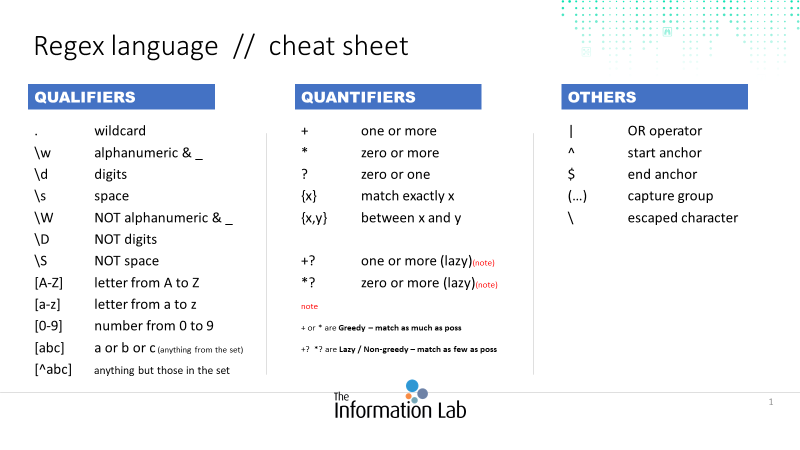

Why Greedy Matching Matters
Greedy expressions can:
Accidentally match too much
Cause unexpected results when parsing HTML, XML, or logs
Require careful pattern design
Example issue
<.*>
❌ Too broad
✔ Often needs constraints or lazy quantifiers (like .*?)
Quick Tip
If your regex matches more than you expect,
it’s probably because a greedy quantifier is consuming too much.
Summary
Greedy expressions are default in regex
They always match the longest possible string
Quantifiers like
*,+,?,{m,n}are greedy by natureUnderstanding greedy behavior helps avoid over-matching bugs


No comments:
Post a Comment